
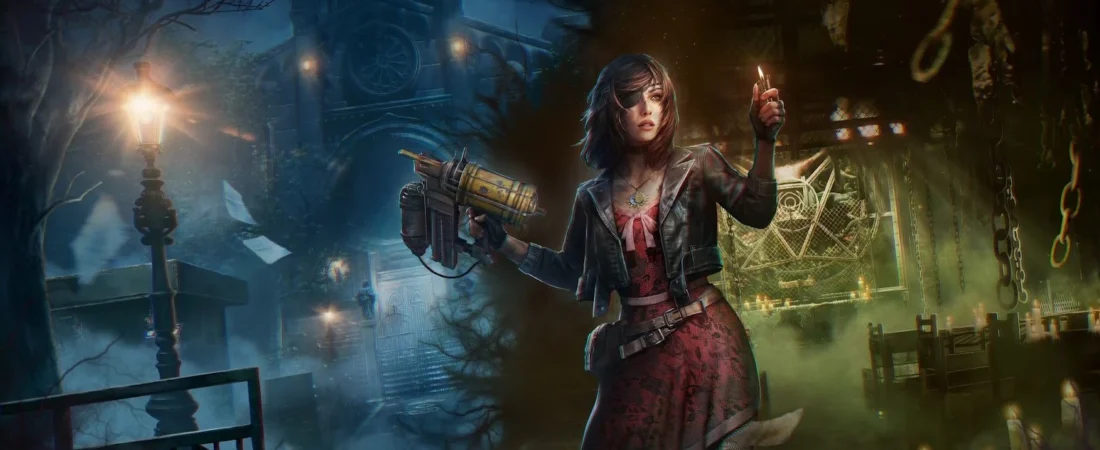
The best horror games are those that never give you all the tools you need to feel safe. Rather than showering players with ammunition or placing healing items around every corner, these games force us to think twice before confronting a creature and to distrust every seemingly empty corridor. Tormented Souls II embraces this philosophy wholeheartedly, helping it stand out in a genre that has become increasingly crowded in recent years.
Available for Nintendo Switch 2 since October 15, the second entry in the franchise follows a formula reminiscent of the earliest Resident Evil games, proving that traditional survival horror still has plenty to offer. Developed by Chilean studio Dual Effect Games and published by PQube, the game brings Caroline Walker back for another supernatural adventure.
This time, the protagonist sets out to uncover the truth behind the supernatural events surrounding her sister, Anna. Their investigation leads them to Villa Hess, an isolated town in southern Chile where a mysterious clinic hides secrets as disturbing as the creatures roaming its corridors. Get ready to face monsters, ghosts, and merciless religious fanatics.
A Nightmare Straight Out of the Classics
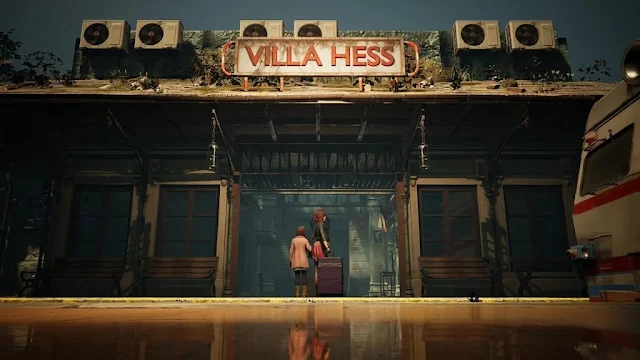
Anyone who grew up playing the original Resident Evil and Silent Hill games will quickly recognize the main influences behind Tormented Souls II. Fixed camera angles, which shift as we move through the detailed environments, are among the clearest signs of this inspiration. Besides creating cinematic compositions, the camera limits our field of vision, turning doors, corners, and narrow passageways into constant sources of anxiety.
Progression follows a familiar structure, too. Instead of simply moving forward by defeating enemies, players must explore environments, collect objects, interpret clues, and solve puzzles to unlock new paths. An iron bar might seem useless until we find the right place to use it, while seemingly ordinary items can become essential much later.
The first thing you should know before starting is that you’ll spend plenty of time revisiting the same locations. Backtracking is an integral part of the exploration mechanics. Although the game is somewhat linear, these trips help guide players without eliminating the need to pay attention to their surroundings. The game makes your objectives clear without cluttering the screen with an intrusive HUD, thanks to carefully designed environments that subtly guide your progress. This is a major achievement for the level design team.
Movement and controls fall somewhere in the middle: neither as fluid as those of most modern games nor as restrictive as those found in survival horror titles from the 2000s. Still, players unfamiliar with the genre’s early days may find the controls somewhat clunky for a game released in 2026.
In this journalist’s opinion, however, that approach adds a certain charm to the experience. It complements the cautious progression, inventory management, and need to avoid unnecessary confrontations, especially when your health is low and you haven’t saved your progress in a safe room.
Limited Ammo, Lasting Tension
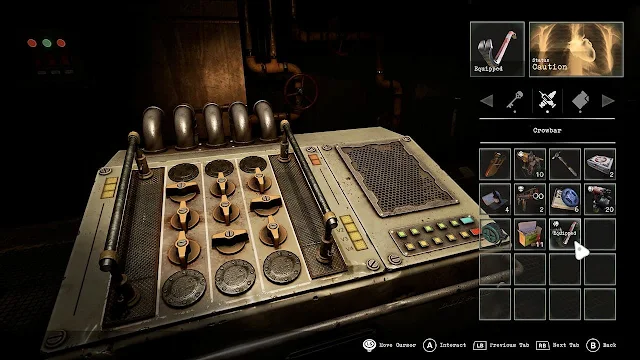
As mentioned earlier, resource management is one of the game’s defining features. Ammunition and healing items are scarce, meaning not every enemy is worth a firefight. In some situations, saving your bullets for a future encounter is a much smarter decision than trying to eliminate everything that moves.
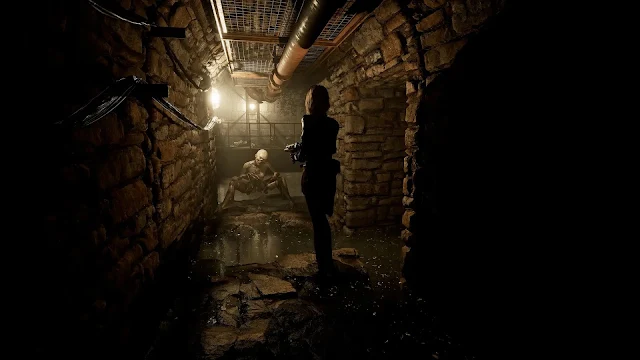
This scarcity changes the way you explore each environment. Take the spider-like creature that requires a dozen nail gun shots to kill but goes down with a single shotgun blast. You can line up two or three of these creatures in a narrow corridor and use one shotgun shell to take them all out at once.
Combat can also be surprisingly challenging. Caroline’s movement, both when walking and running, feels sluggish, much like it did in games from the late 1990s. Dodging attacks in tight corridors is practically impossible, and players can easily end up trapped in a dark dead end while trying to escape. If you find yourself facing two or three creatures at once, try to eliminate them as quickly as possible. Otherwise, taking damage is almost inevitable.
Save tapes, on the other hand, are relatively plentiful. This helps soften the game’s considerable difficulty, allowing Caroline to return to a safe room after completing a series of important tasks. Early on, I wasn’t aware of this and tried to conserve my tapes, only to lose almost two hours of progress after an unexpected death.
The shortage of healing items makes the limited arsenal even more punishing. You’ll constantly have to decide whether to empty your nail gun to prevent a potentially fatal attack or use a painkiller while your health indicator reads “Caution.” Learning enemy movement patterns can make a huge difference when it comes to avoiding potentially lethal damage.
A Story That Embraces the Absurd
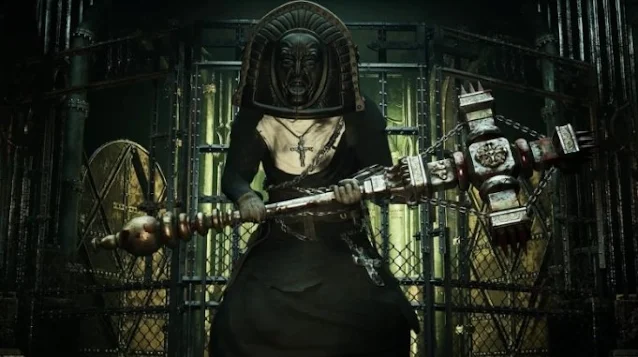
While Tormented Souls II follows a traditional structure, its narrative isn’t afraid to go over the top. The story combines macabre experiments, supernatural events, and increasingly bizarre situations, delivering a series of revelations that keep players curious.
The search for Anna is the starting point, but the mysteries surrounding Villa Hess soon expand the scope of the investigation. As new information comes to light, it’s increasingly difficult to predict where the story is heading. At times, the sheer number of bizarre events feels like something pulled from an especially creative nightmare. This fits nicely with mechanics such as time travel and journeys to “the other side.”
The plot shouldn’t be mistaken for a realistic or subtle narrative. Some developments feel convenient, serving to make the story fit the gameplay, but they rarely come across as completely implausible. The narrative’s greatest strength lies in its ability to raise new questions and reveal unexpected connections, making players eager to discover what strange turn of events comes next. When it comes to horror and violence, the adventure provides plenty of disturbing mysteries to keep you moving forward.
Impressive Visuals, With Compromises on Switch 2
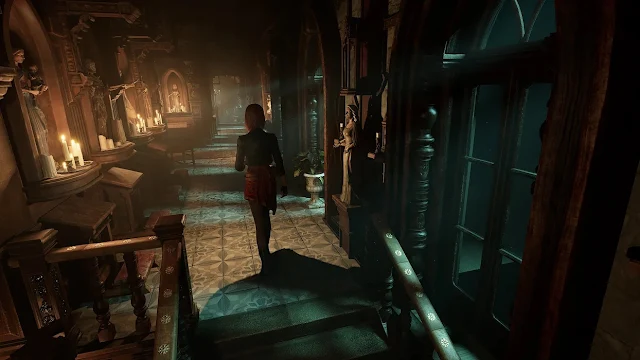
The art direction shines when it comes to building the game’s atmosphere. Environments are richly detailed, while the contrast between light and shadow helps conceal threats (and some graphical shortcomings). The scenery maintains a sense of unease even when no immediate danger is present. Fixed camera angles also enhance the visual composition, turning each room into a carefully crafted scene designed to sustain a constant feeling of tension.
The Nintendo Switch 2 version, however, comes with some technical compromises. The game is capped at 30 frames per second, well below the performance available on PC, for example. Although this frame rate doesn’t significantly disrupt the adventure’s slower pace, it is a limitation worth mentioning.
Handheld mode suffers a little more, particularly because of the lack of brightness adjustments. Depending on where you’re playing, it can be difficult to make out what’s happening on screen. Whenever possible, my recommendation is to dock the console and enjoy the game on a larger TV.
Some visual elements also lose quality compared with more powerful versions, particularly reflections and cinematic sequences. Even so, the overall presentation remains solid. This isn’t a technically flawless port, but it still delivers what matters most to the experience: convincing environments and clearly readable spaces.
The Soundtrack Completes the Nightmare
Just like the environmental design, the audio deserves plenty of praise. The soundtrack establishes an atmosphere of tension without constantly demanding attention, while sound effects reinforce the feeling of vulnerability during exploration.
Audio heightens the uncertainty with noises, footsteps, screams, and environmental sounds that suggest something might be nearby, even when we can’t immediately identify the threat. Jump scares appear from time to time, but they aren’t constantly thrown at the player. This approach works well without overwhelming the experience.
While the soundtrack may not be particularly memorable, the developers have clearly done a competent job with the audio. It complements the rest of the experience and helps maintain an unsettling atmosphere throughout the investigation.
Classic Survival Horror at Its Best
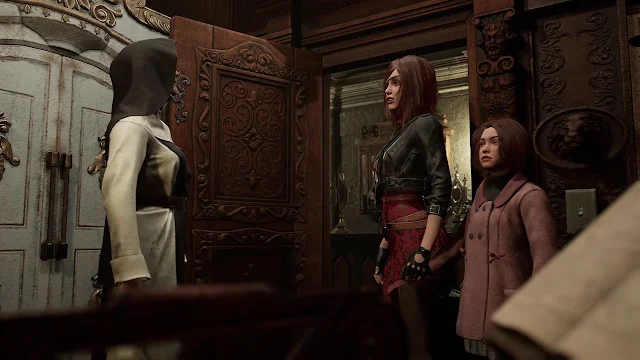
Tormented Souls II doesn’t try to hide its influences, and perhaps that’s precisely why it works so well. It feels almost like a modernized Resident Evil, featuring creative puzzles and brain-teasing riddles that demand sharp thinking and close attention to detail. Despite borrowing so many elements from its predecessors, the game has plenty of personality and improves upon the original.
For anyone who misses old-school survival horror, where every bullet counts and a locked door can lead to a lengthy investigation, Caroline Walker’s journey is an easy recommendation. The bizarre narrative, well-crafted environments, resource management, and effective soundtrack come together to create a distinctive experience that stays true to its vision.
More than a nostalgic trip, Tormented Souls II is a reminder that classic horror is still alive and well. Sometimes, the best way to survive is to think twice before pulling the trigger. Your poor soul will have plenty to endure!
Pros
- Faithfully recreates the classic survival horror formula.
- Fixed camera angles and puzzles encourage exploration.
- A story filled with mysteries, bizarre events, and twists.
- Effective soundtrack that builds tension.
- Scarce ammunition and healing items make combat more strategic.
- Brazilian Portuguese menus, text, and subtitles.
Cons
- Capped at 30 FPS on Nintendo Switch 2.
- Visual downgrades compared with more powerful versions.
- Clunky combat may frustrate some players.
- Linear progression and familiar genre references may feel unoriginal to some players.
Score: 8.5/10
Platform reviewed: Nintendo Switch 2
Review copy provided by: PQube (digital copy)